



Chapter 7A Fire-Resistant Construction: Class A Roofs, Ember-Resistant Vents, and What Actually Saves Homes
After you've survived a wildfire, the question that matters most isn't really about codes — it's whether the next fire will take the house again. Fortunately, the answer is well-researched: yes, you can build a home that survives wildfires with high probability, and California Building Code Chapter 7A codifies most of what works.
Here's what Chapter 7A actually requires, what the post-fire forensic research shows really matters, and the three or four upgrades beyond code that are genuinely worth the money.
What Chapter 7A Is
Chapter 7A of the California Building Code — "Materials and Construction Methods for Exterior Wildfire Exposure" — applies to any new construction, rebuild, or major addition in a Very High Fire Hazard Severity Zone (VHFHSZ) or Wildland-Urban Interface (WUI) Fire Area.
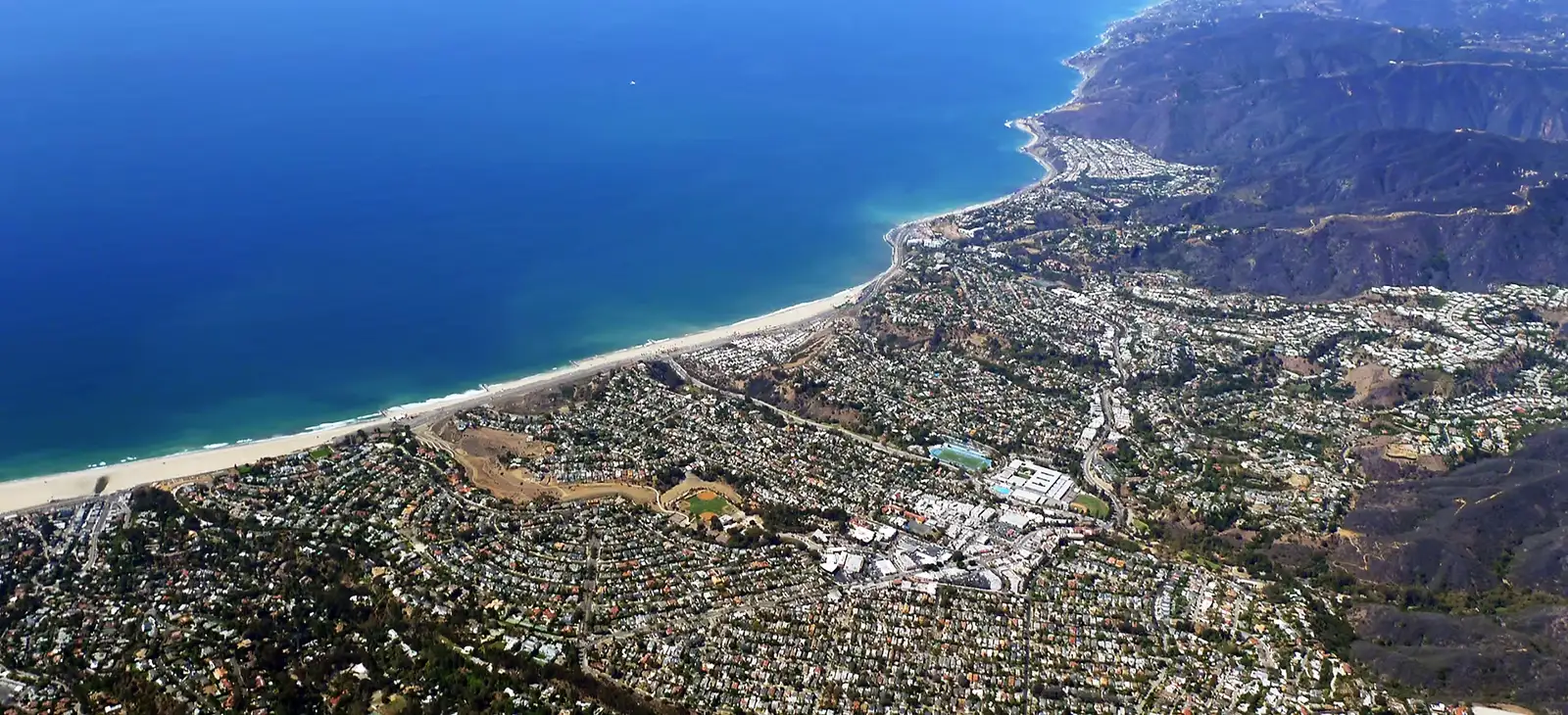
Almost all of Pacific Palisades (90272) is VHFHSZ. Most of Altadena above Altadena Drive is VHFHSZ. Lower Altadena south of Woodbury varies but is often classified as High Fire Hazard (not Very High), which triggers similar but slightly relaxed standards.
Chapter 7A addresses five components of your home's exterior envelope.
1. Roofing (Section 705A)
Code Requirement
Your roof must be Class A rated — the highest fire rating, tested to resist burning brands, flame spread, and flying embers.
What Qualifies
- Clay or concrete tile
- Metal roofing (standing seam, tile profile)
- Class A composition shingles (most premium architectural shingles are Class A)
- Slate
- Class A-rated synthetic shake
What Doesn't
- Cedar shake (even treated)
- Non-Class-A composition shingles
- Recycled rubber (unless specifically Class A rated)
The Research
Post-Camp Fire and post-Thomas Fire forensic studies consistently show roof ember ignition is the #1 cause of home loss in wildfires — not direct flame contact. Class A roofing alone dramatically reduces ember ignition risk.
Cost Impact
Class A roofing typically costs the same or slightly less than premium non-Class-A options. Class A composition shingles are readily available; metal and tile cost more but are unrelated to the fire rating.
2. Attic and Eave Venting (Section 706A)
Code Requirement
All vents must be ember-resistant, meaning they prevent passage of embers and flames through openings. Typically 1/8" mesh or smaller, flame-and-ember-resistant rated, and ICC-listed.
What Qualifies
- Brandguard, Vulcan, O'Hagin, and similar ember-resistant vent products
- Specific ICC-listed baffle vents for eaves and ridges
- Sealed soffit assemblies (no vents at all, with alternative venting)
What Doesn't
- Standard galvanized mesh screen vents
- Old gable vents with plain hardware cloth
- Open eave overhangs (must be boxed with soffits)
The Research
Ember intrusion through attic vents is the #2 cause of home loss. Embers travel miles ahead of a flame front, enter attics through vents, and ignite insulation and framing. Ember-resistant vents reduce this pathway to near-zero.
Cost Impact
$15–$40 per vent upcharge over standard. For a typical single-family home, $500–$1,500 total. Among the highest ROI fire-hardening investments.
3. Exterior Walls (Section 707A)
Code Requirement
Exterior walls must use non-combustible or ignition-resistant materials, or be ICC-listed assemblies meeting specific fire tests.
What Qualifies
- Stucco (traditional hardcoat over paper-backed lath, or one of the fiber-reinforced systems)
- Fiber cement siding (James Hardie and similar, Class A by default)
- Metal siding
- Masonry (brick, stone veneer over non-combustible backup)
- ICC-listed fire-resistant wood siding systems (limited but available)
What Doesn't
- Standard wood siding (cedar, pine, redwood) even when painted
- Vinyl siding (melts and contributes to fire spread)
- Certain composite wood products without WUI-specific listing
The Research
Wall ignition is less catastrophic than roof or vent ignition but still matters. Fiber cement siding and stucco perform exceptionally well in forensic studies.
Cost Impact
Fiber cement is cost-competitive with wood siding. Stucco has been standard in LA for decades. Metal siding costs more for visual style choice, not fire performance.
4. Windows (Section 708A)
Code Requirement
Windows must be dual-pane, with at least one pane tempered (or specifically fire-rated), and ICC-listed for WUI exposure.
What Qualifies
- Most mid-tier and up dual-pane windows (check WUI listing)
- Tempered glass on the outer pane
- Some fully ICC-listed fire-rated windows (higher cost, limited style options)
What Doesn't
- Single-pane glass
- Standard dual-pane without tempered outer
- Glass block without specific WUI listing
The Research
Glass breakage during fire exposure allows fire into the interior. Dual-pane with tempered outer resists thermal shock far longer than single-pane or annealed dual-pane. This buys critical minutes for fire to pass without breaching.
Cost Impact
Minimal premium for WUI-listed windows at most manufacturers — often it's just a matter of specifying the right SKU.
5. Decks, Stairs, and Similar (Section 709A)
Code Requirement
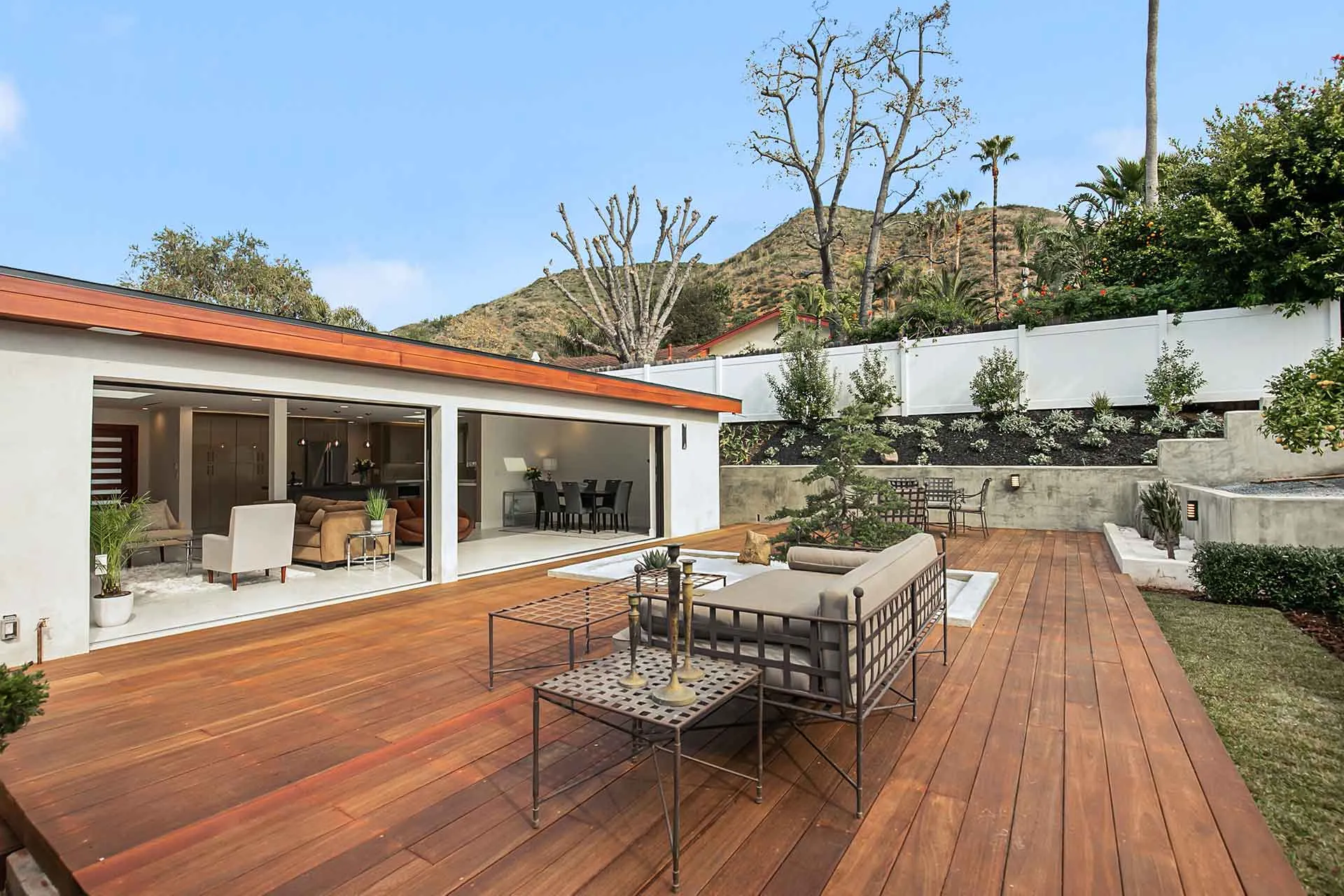
Decks, stairs, balconies, and similar attached structures within 10 feet of the main structure must be non-combustible or ignition-resistant.
What Qualifies
- Concrete, metal, or masonry decks
- Fire-resistant composite decking (Trex, TimberTech, and similar ICC-listed WUI grades)
- Exposed exterior-grade metal stairs
What Doesn't
- Standard pressure-treated wood decking
- Plastic composite decking without WUI listing
- Uncovered wood support structures within 10 feet
The Research
Decks are a major ignition pathway when embers land in gaps between boards or under the deck itself. Non-combustible decking eliminates this.
Cost Impact
WUI-rated composite adds $10–$25/sqft over wood. For a 400 sqft deck, $4,000–$10,000.
What Chapter 7A Doesn't Address (But Should)
Forensic research from Camp, Tubbs, Thomas, Woolsey, and now Eaton/Palisades fires points to several additional factors that Chapter 7A doesn't explicitly mandate — but materially improve survival:
Defensible Space (Zone 0, 1, and 2)
California now requires Zone 0 (0–5 feet from structure) to be completely non-combustible: no wood chips, no wood fences attaching to the house, no flammable shrubs. Zone 1 (5–30 ft) requires lean spacing. Zone 2 (30–100 ft) requires reduced fuel loads.
This is regulated separately from Chapter 7A (through CalFire Public Resources Code §4291) but is just as important.
Gutters
Debris-filled gutters are a major ember-ignition pathway. Metal gutters with ember-resistant covers (or no gutters at all) dramatically reduce ignition risk.
Soffits
Open eave soffits create ember traps. Boxed-in soffits with ember-resistant venting eliminate this.
Attic Insulation Choice
Fiberglass batts ignite quickly when embers reach the attic. Mineral wool or blown-in cellulose (properly treated) is more fire-resistant. This isn't code-mandated but it matters.
Water Supply
Remote Altadena or Malibu properties with long driveways may require on-site water tanks for firefighting. Typically 2,500–5,000 gallon capacity. Your lot's specific requirement depends on distance to nearest hydrant.
Interior Sprinklers
Residential interior sprinklers are already required for new construction in California, but they don't stop exterior fires. They prevent interior spread once fire breaches — meaningful, but secondary to envelope hardening.
What to Spend Extra On (Beyond Code)
If you have budget beyond Chapter 7A compliance, here's what the forensic data supports:
- Class A roofing with underlayment upgrade — premium fire-resistant underlayment under tile adds another layer of protection
- Full soffit assemblies with ember-resistant venting — more expensive than standard venting, meaningfully safer
- Defensible space landscaping — professional design that meets Zone 0/1/2 requirements over the long term
- Metal gutters with leaf guards
- Exterior fire sprinklers — roof-mounted systems that wet down the envelope during fire approach. ~$8,000–$20,000 for a residential install. Not required, but highly effective.
- Water tank — even on a municipal-water lot, a 2,500-gallon rainwater/firefighting tank adds redundancy
What's Not Worth Paying Extra For
- Steel stud framing (unless you need it for height/seismic reasons)
- Interior fireproofing upgrades (interior fires are different risk)
- Fire-rated insulation above code (diminishing returns)
- "Fireproof paint" on wood structures (doesn't perform as marketed in most cases)
Chapter 7A in Practice: How We Specify It
On every Amerbuild rebuild, we include:
- Class A roofing (composition, metal, or tile per client preference)
- Brandguard, Vulcan, or equivalent ember-resistant vents (eave, ridge, gable as applicable)
- Fiber cement siding, stucco, or metal — no combustible siding
- Boxed soffits with ember-resistant soffit venting
- Dual-pane tempered windows per WUI listing
- Non-combustible decking within 10 feet
- Sealed Zone 0 around the foundation perimeter (no vegetation in the first 5 feet)
- Metal gutters with leaf guards
- Ordinance or Law coverage documentation to support insurance reimbursement of fire-hardening upgrades
Chapter 7A is our baseline spec, not an upgrade option. You don't pay extra for it — you pay extra if you want to go beyond it.
The Bottom Line
Chapter 7A is a well-researched, practically-engineered code that dramatically reduces your home's ignition risk. Properly executed, it's the difference between losing the house in the next fire and losing only landscape. The cost impact over a non-fire-hardened rebuild is typically 3–7% of construction, offset by reduced insurance premiums and — in the event of another fire — potentially saving the entire structure.
Amerbuild builds to Chapter 7A as standard on every Pacific Palisades and Altadena rebuild. We coordinate with CalFire-certified assessors, source from ICC-listed manufacturers, and document all fire-hardening specs for your insurance carrier. Contact us for a free on-site consultation.