



How to Finance Your ADU: Loans, Grants & Tax Incentives
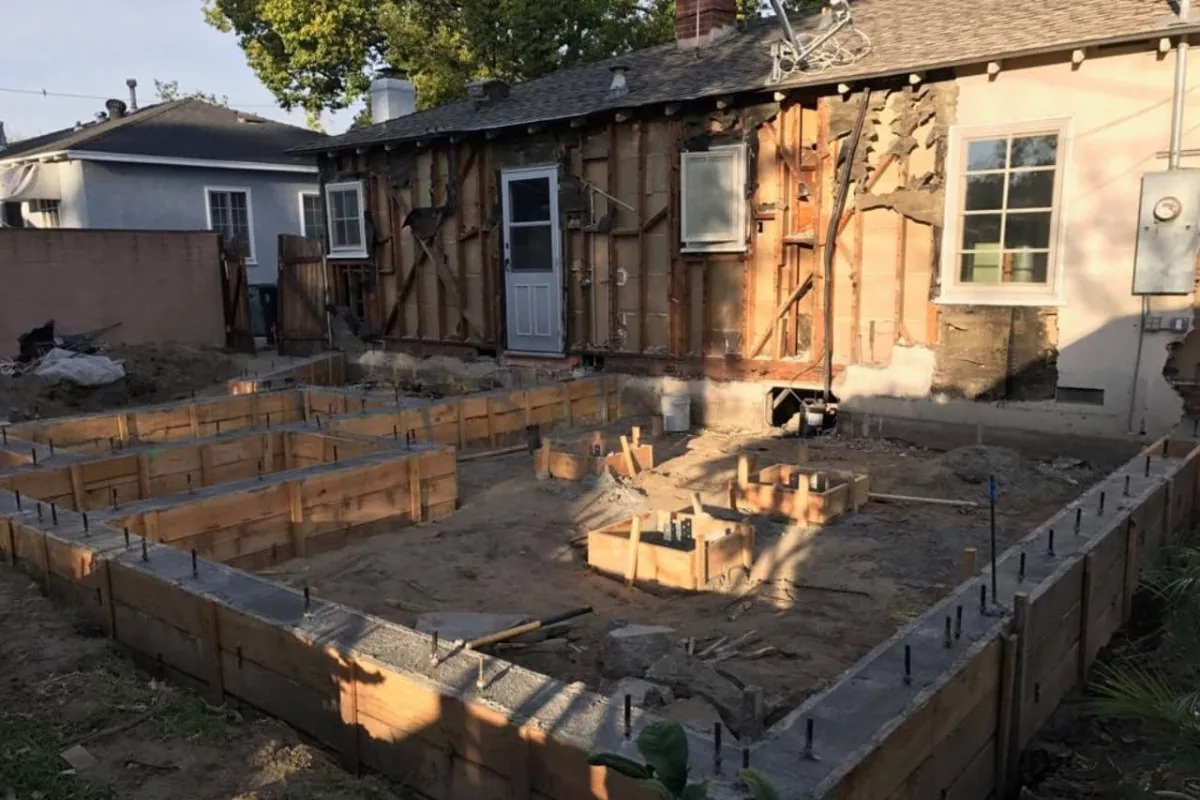
Building an ADU in Los Angeles typically costs between $150,000 and $350,000 depending on the type, size, and finishes. That's a serious investment — but you don't need to have all that cash sitting in a savings account to make it happen.
Between home equity loans, dedicated ADU loan products, government grants, and tax incentives, most homeowners have more financing options than they realize. The key is understanding which options you qualify for and which ones make sense for your specific situation.
This guide covers every major way to finance your ADU project in California.
Home Equity Line of Credit (HELOC)
A HELOC is the most common way homeowners finance ADU construction. It works like a credit card backed by your home equity — you draw funds as needed and only pay interest on what you use.
Why It Works for ADUs
- Flexible draws — You can pull funds in stages as construction progresses, rather than taking a lump sum upfront
- Interest-only payments — During the draw period (typically 5-10 years), you only pay interest on the balance
- Lower rates — Because it's secured by your home, rates are significantly lower than personal loans or credit cards
- No refinancing required — Your existing mortgage stays in place
What to Watch Out For
- Your home is the collateral — if you can't make payments, you risk foreclosure
- Variable interest rates mean your payments can increase over time
- Most lenders require at least 15-20% equity remaining after the HELOC is factored in
- Some lenders won't count projected ADU rental income when qualifying you
Typical Terms
- Loan-to-value (LTV): Up to 80-90% of your home's current value
- Interest rates: Variable, typically prime rate + 0.5% to 2%
- Draw period: 5-10 years
- Repayment period: 10-20 years
Best for: Homeowners with significant home equity who want flexibility in how and when they draw funds.
Home Equity Loan
A home equity loan is similar to a HELOC but gives you a lump sum at a fixed interest rate. Think of it as a second mortgage.
Advantages Over a HELOC
- Fixed rate — Your monthly payment never changes, making budgeting predictable
- Lump sum — You get all the funds at closing, which simplifies paying your contractor
- Structured repayment — Fixed monthly payments over a set term (typically 5-30 years)
Drawbacks
- You pay interest on the full amount from day one, even if construction hasn't started
- Less flexible than a HELOC if your project costs change
- Closing costs can be 2-5% of the loan amount
Best for: Homeowners who prefer payment predictability and have a firm construction budget.
Cash-Out Refinance
A cash-out refinance replaces your existing mortgage with a new, larger one — and you pocket the difference in cash. If your home has appreciated significantly, this can unlock substantial funds.
When It Makes Sense
- You can get a lower interest rate than your current mortgage
- You have enough equity to pull out cash while keeping your LTV under 80%
- You want to consolidate your mortgage and ADU financing into one payment
When It Doesn't
- If current interest rates are higher than your existing mortgage rate, you're essentially paying more for your entire loan — not just the ADU portion
- Closing costs on a full refinance are typically $3,000 to $10,000+
- The process takes 30-60 days, which can delay your project timeline
Best for: Homeowners with older, higher-rate mortgages who can improve their overall rate while accessing cash.
ADU-Specific Construction Loans
Several lenders now offer loan products designed specifically for ADU construction. These have gained traction as California's ADU market has matured.
How They Work
Unlike a traditional home equity product, ADU construction loans factor in the future value of your property after the ADU is built. This means you may qualify for more than your current equity alone would support.
Key Features
- Future value appraisal — The lender orders an appraisal based on your property's projected value with the completed ADU
- Construction-to-permanent — Many convert automatically from a construction loan to a standard mortgage after the build is complete
- Draw schedules — Funds are released in stages as the contractor completes milestones
- Higher LTV limits — Some lenders go up to 90% of the future appraised value
What to Prepare
- Architectural plans and permits (or at least plan check submittal)
- A licensed contractor with a signed construction agreement
- A detailed scope of work and construction budget
- Your property's current title report
Best for: Homeowners who lack significant existing equity but whose property will gain substantial value from the ADU.
California ADU Grant Program (CalHFA)
The California Housing Finance Agency (CalHFA) offers the ADU Grant Program, which provides up to $40,000 to low- and moderate-income homeowners for predevelopment and non-recurring closing costs associated with ADU construction.
What It Covers
- Site preparation
- Architectural designs
- Permits and fees
- Soil tests, surveys, and engineering reports
- Impact fees and utility connection fees
Eligibility Requirements
- You must own and live in the property
- The property must be in California
- Your household income must be at or below 80% of the Area Median Income (AMI) for your county
- The ADU must be permitted
- You must work with a CalHFA-approved lender
Important Details
- This is a junior lien on your property — essentially a deferred loan. If you sell or refinance within a certain period, you may need to repay it
- The grant does not cover construction costs — it's specifically for predevelopment and soft costs
- Funds are limited and the program is subject to available funding each fiscal year
Best for: Income-qualifying homeowners who need help covering the upfront soft costs that come before construction even starts.
Los Angeles City ADU Programs
The City of Los Angeles has launched several initiatives to encourage ADU construction, particularly for homeowners willing to rent to lower-income tenants.
LA ADU Accelerator Program
This program streamlines the permitting process for pre-approved ADU plans. While not a direct financing program, it significantly reduces design and permitting costs by offering:
- Pre-approved standard plans — Skip the lengthy plan review process
- Reduced permit fees — Lower costs compared to custom-designed ADUs
- Faster timelines — Pre-approved plans can cut months off the permitting phase
Affordable ADU Incentives
If you commit to renting your ADU at below-market rates to qualifying tenants, you may be eligible for:
- Fee waivers — The city may waive development impact fees
- Expedited processing — Priority permitting for affordable ADU projects
- Density bonus considerations — Additional development flexibility
Check with the Los Angeles Department of Building and Safety (LADBS) for current program availability, as these programs update frequently.
FHA 203(k) Rehabilitation Loan
If you're buying a home that needs work — or want to renovate your existing home and add an ADU simultaneously — an FHA 203(k) loan rolls everything into a single mortgage.
How It Applies to ADUs
- Covers both the purchase (or refinance) of the home and the cost of constructing the ADU
- Requires as little as 3.5% down payment for purchase transactions
- Allows you to finance up to the FHA loan limit for your county (Los Angeles County limit is updated annually)
- The ADU must be built by a licensed contractor with permits
Limitations
- Requires an FHA-approved lender and appraiser
- The property must be your primary residence
- There's significant paperwork and a longer timeline than conventional construction loans
- Mortgage insurance is required regardless of your down payment
Best for: Homebuyers who want to add an ADU to a property they're purchasing, or homeowners planning a major renovation alongside ADU construction.
Property Tax Considerations
Understanding how an ADU affects your property taxes helps you plan the true long-term cost.
How California Assesses ADU Property Tax
Under Proposition 13, your existing home's assessed value doesn't change when you add an ADU. Only the new construction (the ADU itself) gets reassessed at current market value.
This means:
- Your main home's property tax stays the same
- The ADU adds a supplemental assessment based on its construction cost and market value
- Typical additional property tax for an ADU ranges from $1,500 to $4,000 per year depending on the value added
ADU Property Tax Exclusion
California offers a property tax exclusion for ADUs that are used as affordable housing. If you rent your ADU at below-market rates to qualifying tenants, you may be eligible for a partial or full exclusion of the supplemental assessment.
Tax Deductions and Benefits
Several tax benefits can reduce the effective cost of your ADU.
Rental Income Deductions
If you rent your ADU, you can deduct:
- Mortgage interest allocated to the ADU (proportional to its share of total property value)
- Depreciation — The IRS allows you to depreciate the ADU structure over 27.5 years
- Operating expenses — Insurance, repairs, maintenance, property management fees, and utilities
- Property taxes — The portion attributable to the ADU
Home Office Deduction
If you use the ADU exclusively as a home office for self-employment, you may qualify for the home office deduction, which covers a proportional share of your housing costs.
Capital Gains Considerations
When you eventually sell your property, the ADU may affect your capital gains calculation. Consult a tax professional about how the $250,000 single / $500,000 married exclusion applies when part of your property has been used as a rental.
Creative Financing Strategies
Beyond traditional lending, some homeowners use alternative approaches.
ADU as a Rental Income Asset
Some lenders will consider projected rental income from the ADU when qualifying you for a loan. In Los Angeles, a well-located ADU can generate $1,500 to $3,500+ per month in rental income, which significantly improves your debt-to-income ratio.
Partnering with Family
Multigenerational financing — where a family member who will live in the ADU contributes to the construction cost — is increasingly common. This can be structured as:
- A formal loan with agreed-upon terms
- A gift with proper documentation for tax purposes
- A shared equity arrangement
Construction Phasing
If budget is tight, some homeowners phase the construction:
- Phase 1 — Build the shell, rough plumbing, electrical, and get the unit habitable
- Phase 2 — Upgrade finishes, landscaping, and extras after rental income starts flowing
This requires careful planning with your contractor and permit strategy but can reduce the upfront capital needed.
How to Choose the Right Financing Option
The best financing path depends on your specific situation. Here's a quick decision framework:
| Situation | Best Option |
|---|---|
| Strong home equity, flexible budget | HELOC |
| Want fixed payments, firm budget | Home equity loan |
| Current mortgage rate is high | Cash-out refinance |
| Limited equity, high future property value | ADU construction loan |
| Low-to-moderate income | CalHFA ADU Grant + other financing |
| Buying a new home + building ADU | FHA 203(k) |
Steps to Get Started
- Get a realistic construction estimate — Talk to a licensed contractor before approaching any lender. You need a credible budget to get accurate loan quotes.
- Check your equity — Pull your current mortgage balance and get an informal property valuation.
- Compare multiple lenders — ADU loan products vary significantly between lenders. Get at least 3 quotes.
- Factor in all costs — Don't just finance construction. Account for permits, design, utility connections, landscaping, and a 10-15% contingency.
- Consult a tax professional — Before committing to a financing strategy, understand the tax implications specific to your situation.
The Bottom Line
Financing an ADU is not a one-size-fits-all decision. The right approach depends on your equity position, income, credit profile, timeline, and how you plan to use the unit.
What we see most often with our Los Angeles clients: homeowners combine a CalHFA grant to cover soft costs with a HELOC or ADU construction loan for the build itself. This minimizes out-of-pocket costs while keeping monthly payments manageable — especially once rental income kicks in.
The most expensive mistake isn't choosing the wrong loan — it's delaying the project while your construction costs increase year over year. If you're seriously considering an ADU, start the financing conversation now, even before your plans are finalized.
Ready to start your ADU project? Learn about our full-service ADU and garage conversion process, see completed projects, and get a free estimate.
Explore Our ADU & Garage Conversion Services
Amerbuild is a licensed general contractor specializing in ADU construction across Los Angeles County. Contact us for a free consultation on your ADU project — we can help you understand your construction costs so you can approach lenders with a solid plan.